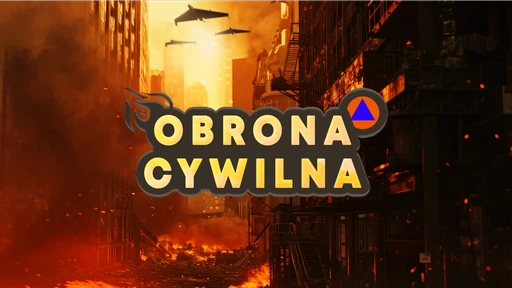


Civil Defense for Wartime Operations
New lessons available:
Air Attack, Nuclear Attack, Nuclear / Radiological / Chemical Threats, Air Attack – Home Evacuation
The Civil Defense VR Training has been developed to prepare participants for real wartime threats through immersive and realistic simulations. The program focuses on building awareness, decision-making skills, and practical survival abilities.
Our civil defense training applications were created on the basis of an official safety guide, allowing everyone to practice correct procedures in crisis situations and be ready to act.
Air Attack
This lesson presents a realistic air raid on a city and teaches users how to respond correctly to the threat. The participant learns to recognize the alarm signal, choose a proper shelter, and follow correct protective behavior, including taking a protective position. The application also shows how to identify the “all clear” signal and safely leave the shelter. Thanks to VR immersion, users can practice every step in a controlled, risk-free environment.
Nuclear Attack
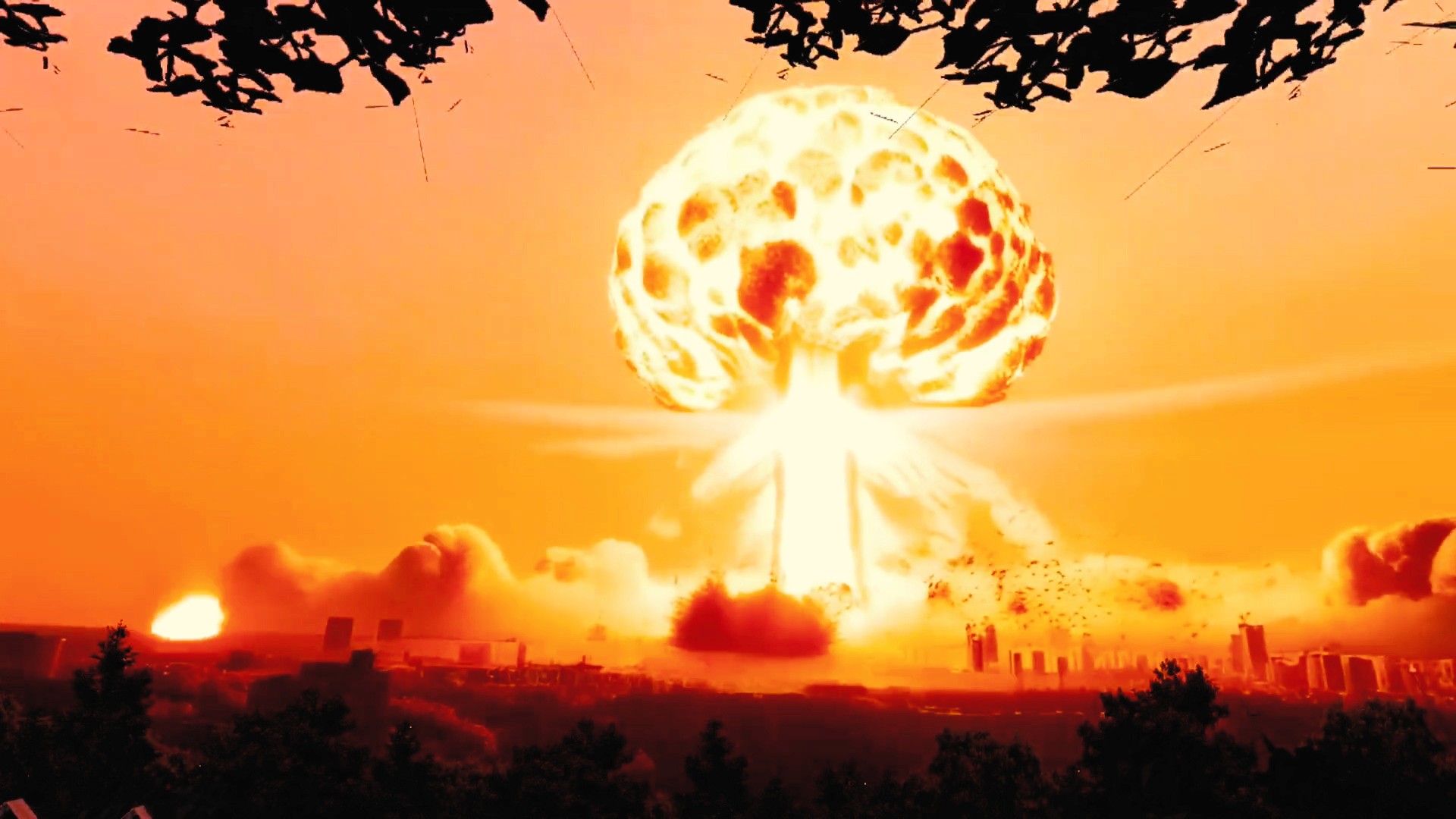
This lesson simulates the threat associated with a nuclear explosion. The participant learns to recognize the alarm, the flash, and the blast wave, and then identify the safest available shelter.
Nuclear, Radiological, Chemical Threats
The scenario places the user in a realistic nuclear hazard situation requiring fast decisions and proper safety actions. It teaches how to avoid contamination and how to safely evacuate from the danger zone, while introducing the fundamental rules of crisis response. With VR immersion, the participant gains essential skills in an engaging and memorable way.
Air Attack – Home Evacuation
This application simulates a sudden air raid alert and guides the user through the process of safely evacuating from home. It teaches how to secure the building before leaving—closing windows, shutting off water supply, turning off electrical and gas devices, and extinguishing all open flames.
It also reminds users to dress appropriately, prepare children together with their contact and medical information, and take the evacuation backpack. The scenario shows how to ensure that neighbors are aware of the alarm and how to assist people with special needs whenever possible.
The realistic VR environment allows participants to practice each step safely and effectively.
Coming soon:
Evacuation Backpack
An evacuation backpack contains the essential items one should take during a sudden evacuation. It should include basic equipment needed to survive the first hours or days outside the home: water, food, documents, hygiene supplies, a first aid kit, flashlight, power bank, and a change of clothes.
In the application, the user learns why preparing the backpack in advance is crucial and how it can significantly increase safety in a real crisis.
Civil Defense VR Training builds mental resilience and readiness to act, ensuring effective response in emergencies where every second counts.
Natural Disaster (coming soon)
In this lesson, the user enters an area where flood risk is rapidly increasing. The application demonstrates how to quickly prepare for a possible evacuation, ensure the safety of family members and neighbors, and secure the home against incoming water.
The participant learns how to protect property, move essential items to higher floors, secure electrical and gas systems, and prepare animals for evacuation.
The simulation emphasizes the importance of responding to weather alerts and explains why staying in a hazard zone after an evacuation order is issued is extremely dangerous.
The lesson also introduces the emergency flag system—white, red, and blue—which allows residents to signal their situation when leaving the house is impossible.
Through immersive VR, the user experiences step-by-step flood preparation, increasing awareness of the risks and real skills needed to act.
Decontamination (coming soon)
This scenario places the user in a realistic contamination event where they must ensure their safety after leaving the hazardous area. The participant experiences the full decontamination process in practice—from securing clothing and belongings to cleaning the skin and preparing to enter an isolated building.
The application demonstrates correct behavior in radiological or hazardous contamination situations and teaches essential reactions that cannot be practiced in traditional training.
Thanks to full VR immersion, the training becomes engaging, memorable, and greatly enhances user awareness.
Watch the video to learn more:


Experience the future of VR training
Training Program
Part I. Training Objective
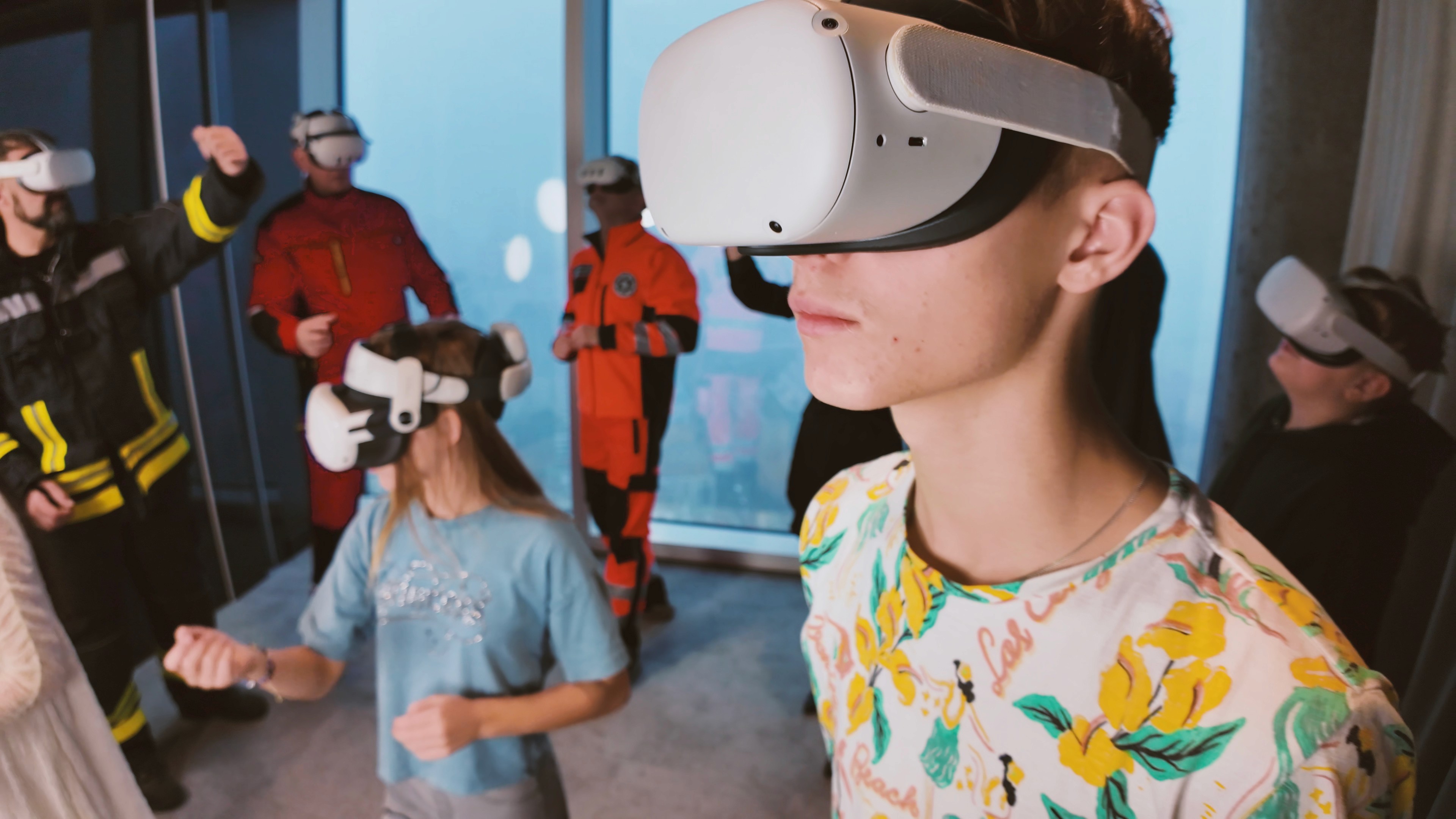
The training aims to prepare participants for effective civil defense in the face of a real threat of armed conflict. Using VR technology, participants will practice procedures for responding to alarms, protection against CBRN threats, avoiding drone dangers, and handling emergencies caused by damaged critical infrastructure. The program develops mental resilience, proper reflexes, and the ability to act under pressure.
Part II. Target Audience
This training is designed for:
employees of workplaces and public administration,
crisis management team members,
uniformed services and paramilitary organizations,
teachers and students within safety education programs,
civilians seeking preparedness for wartime threats.
Part III. Training Program Overview
Part I – Introduction (5 minutes)
explanation of training goals and structure,
presentation of VR features (hand tracking, speech recognition, safety grid),
review of basic civil defense principles.
Part II – VR Simulations (approx. 30 minutes)
Module 1: Air Raid – Procedures in a Danger Zone
training response to combat alarms at home, workplace, and open areas,
rapid location and access to shelters.
Module 2: CBRN Contamination – Protection and Decontamination
room sealing procedures,
use of personal protective equipment,
practical actions in simulated chemical, biological, or radiological attack.
Module 3: Combat Drones – Recognition and Avoidance
identifying reconnaissance and strike drones,
techniques of avoiding detection and seeking cover.
Module 4: Emergency Situations in Conflict Zones
simulation of critical infrastructure failures (power outage, water shortage, fire after shelling),
responding to chaos and destruction.
Part III – Debriefing (10 minutes)
review of participants’ actions in each module,
highlighting correct responses and areas for improvement,
discussion on real-life application of acquired skills,
providing civil defense learning materials.
👉 Total training time: approx. 45 minutes
👉 Format: VR + trainer-led introduction and debriefing
Where will this training be useful?
Our training is designed in the form of short, intensive lessons lasting about 5 minutes. This modular structure makes it extremely flexible and effective in various environments:
Public Events: An excellent tool for use during large-scale events organized by city, municipal, or regional authorities. It allows for the rapid training of a large number of people, who in just a few minutes can experience a realistic simulation and learn key behavioral principles.
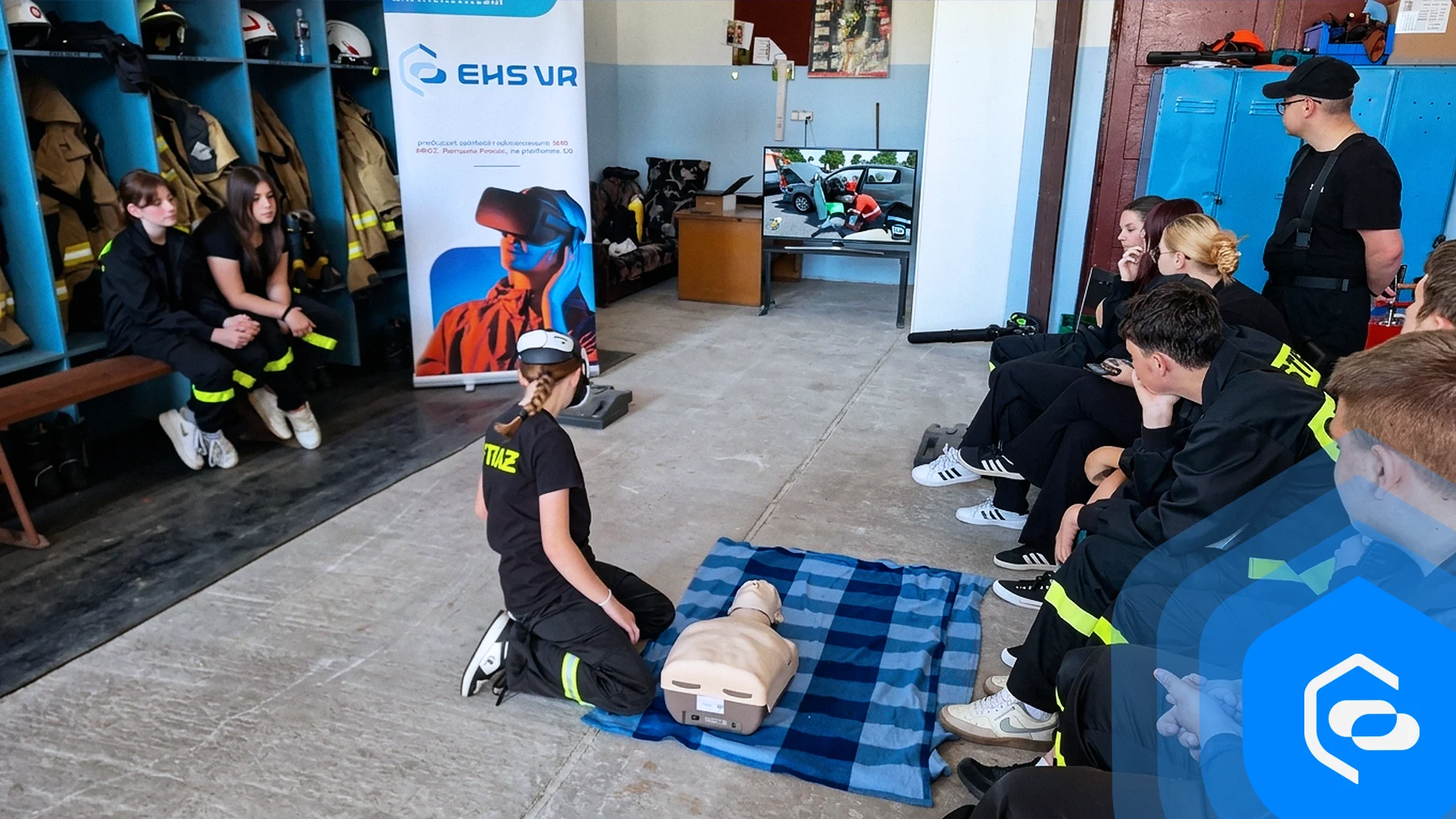
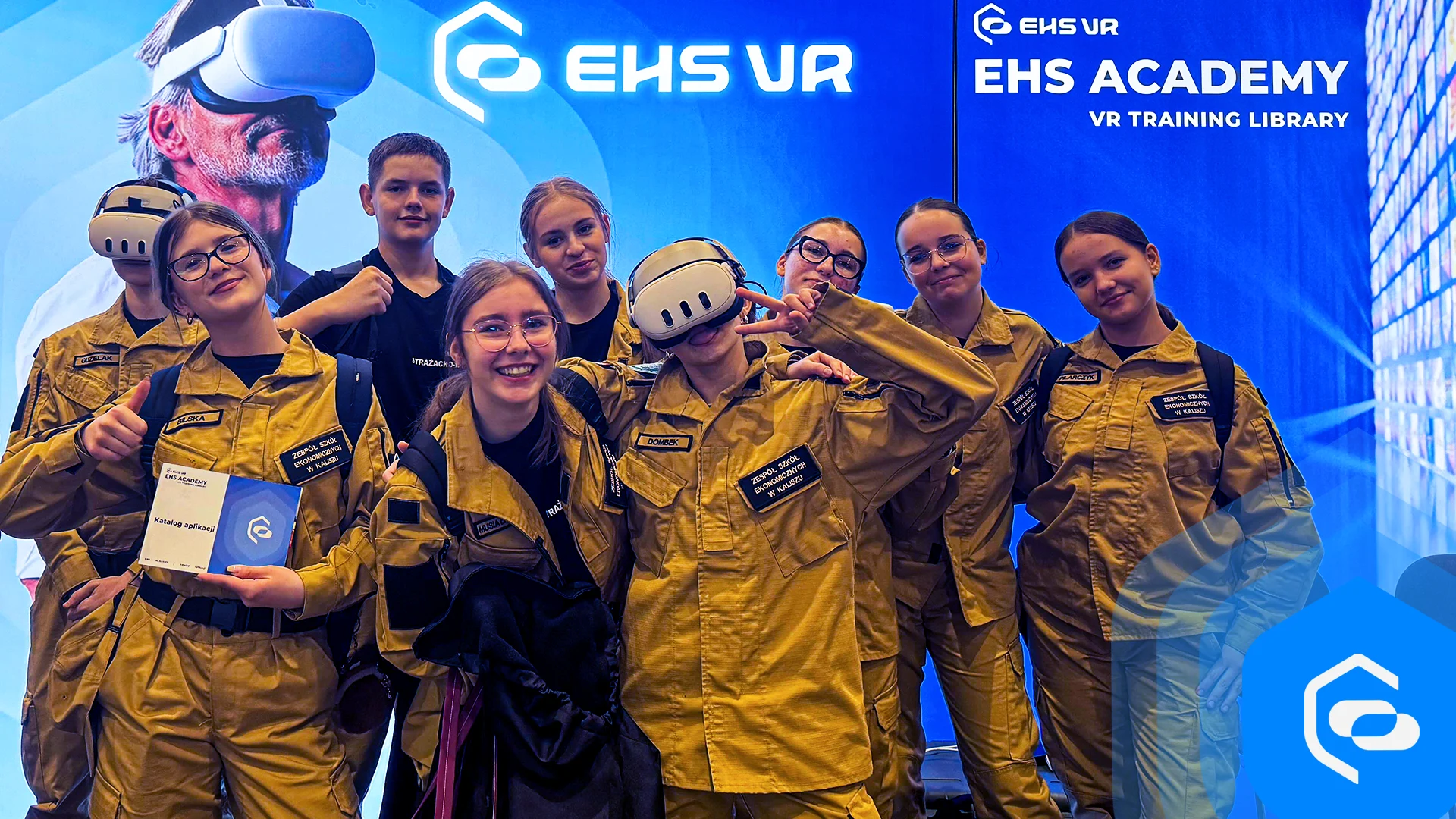
School Education: A great supplement for defense or safety education classes in primary and secondary schools. The engaging VR format captures students' attention far more effectively than traditional methods, building practical skills.
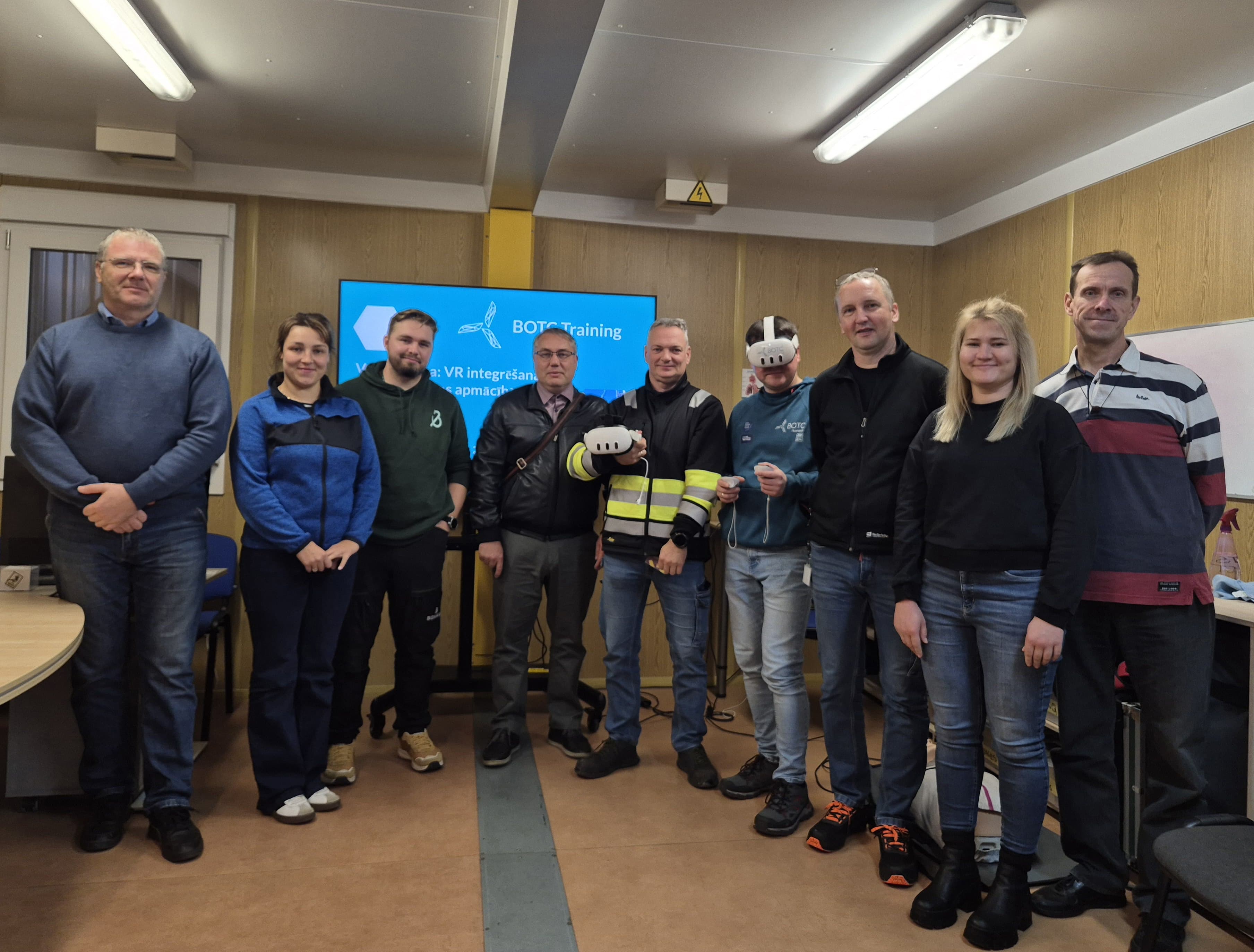
Corporate Training: A modern and effective element for employee training sessions. The modules can be easily integrated into existing programs, raising the team's awareness and readiness for crisis situations, especially concerning procedures at the workplace.
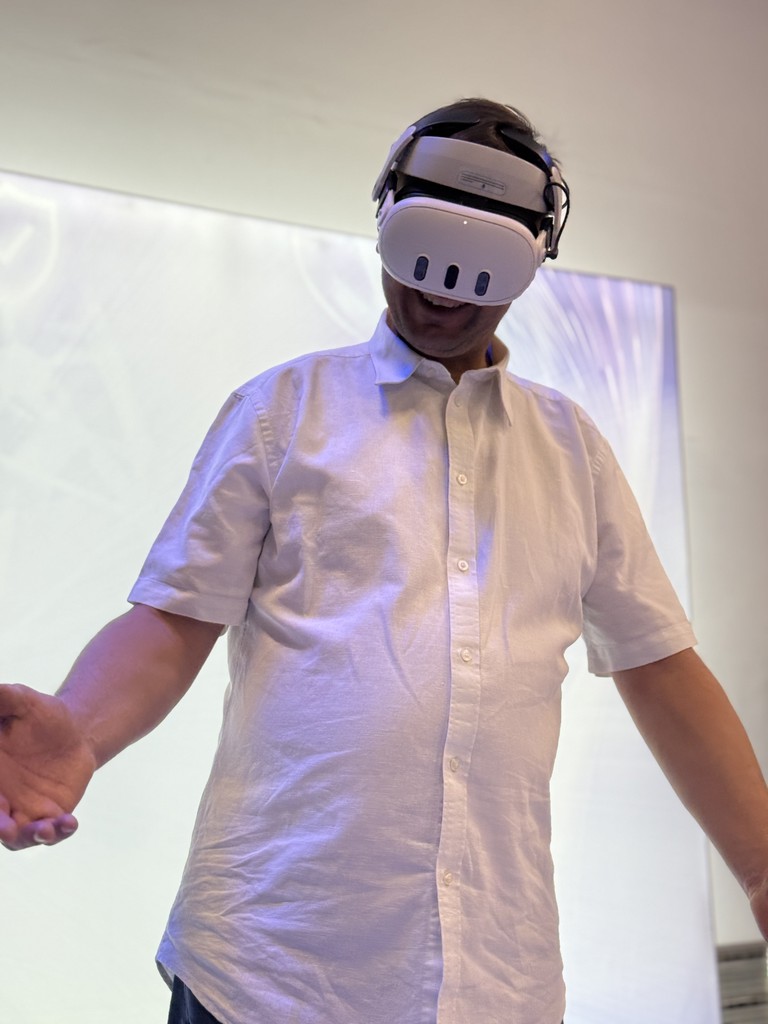
A new level of training
Safety Day
Organize safety days in virtual reality
Certificates
We offer initial and periodic health and safety training with the possibility of obtaining a certificate
Flexibility
Follow the instructions at any time
Security
Training tailored to employees of each industry
Team Building
Use VR technology for team building and collaboration
Diversification of Training
Add variety to your training with a variety of scenarios