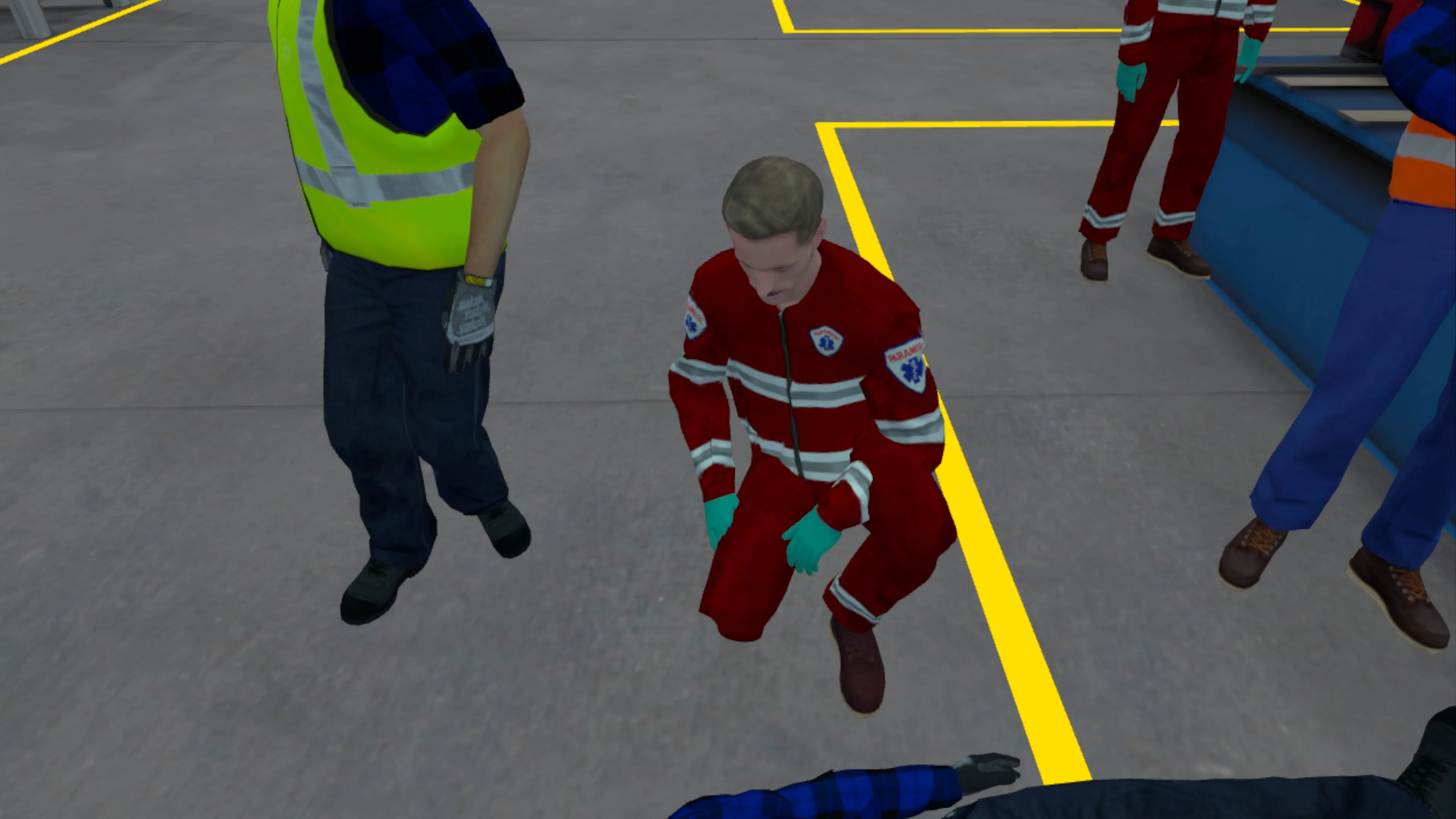
First aid training for companies: what to cover and how to run it
Knowledge5 min read
What the law says about first aid at work, what the training should cover and how to make sure every employee practises CPR and AED use themselves.
 Łukasz Kamiński4 min read
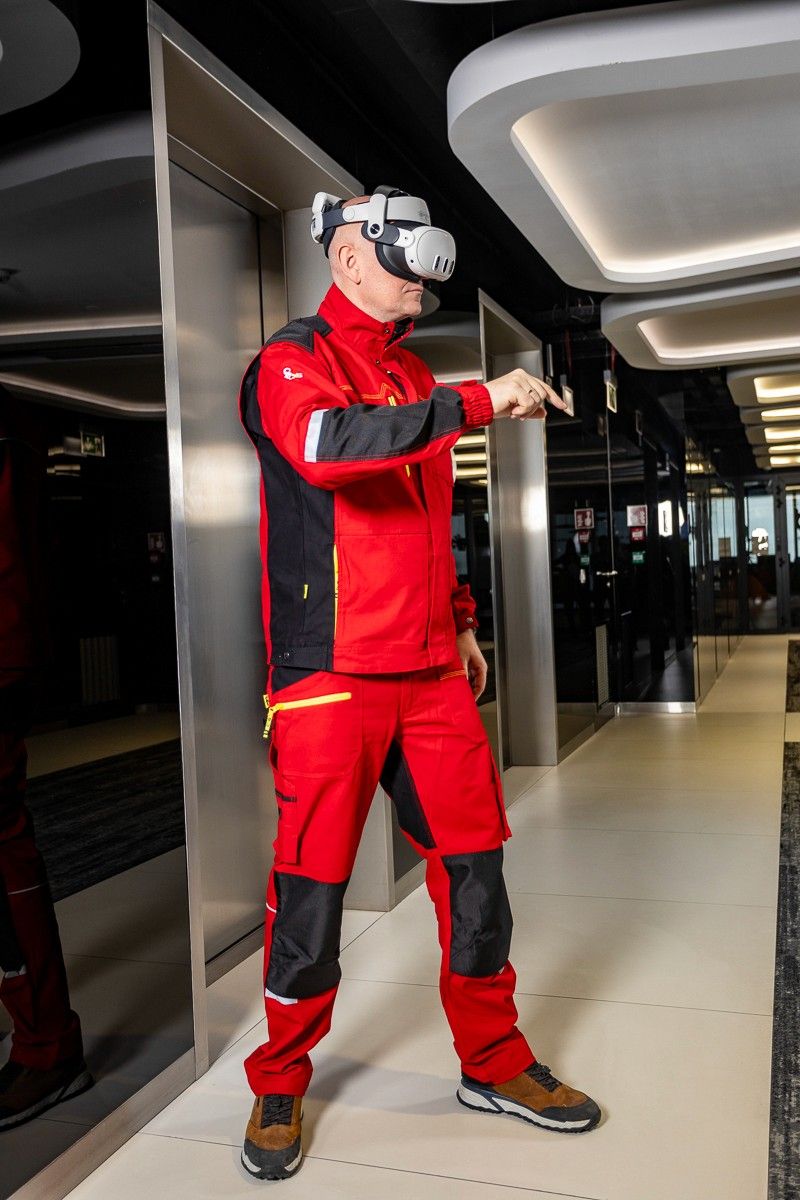
Confined space VR training lets employees go through the whole procedure of working in a tank or another enclosed space, from opening the hatch to evacuation, in a VR headset instead of a real vessel. It is useful precisely because confined space work is one of the hardest things to rehearse on site. Below we explain why, what our app practises and which parts of the preparation it does not replace.
A confined space is a space that is enclosed or partly enclosed, is not designed for people to work in continuously and has limited ways in and out. Typical examples are tanks, silos, vessels, manholes and sewers. The atmosphere inside can be dangerous: there may be too little oxygen or toxic fumes, and you cannot see or smell many of these hazards.
That is why entry is preceded by a series of steps: securing the area, ventilation, atmosphere measurement, choosing PPE and planning how to get someone out if something goes wrong. Each of them matters, and a missed step is hard to correct once someone is inside.
Practising this for real is difficult:
Work in Confined Spaces VR Training is a simulation in which participants carry out the tasks that come before and during work in a tank:
The training takes about 35 minutes. It runs on Meta Quest headsets, the participant uses their own hands thanks to hand tracking, and the app is available in Polish, English, German and Spanish. It needs a play area of 20 by 20 metres, so plan a larger room or a section of the hall for it.
Because the session takes place in a headset, a mistake puts no one at risk, and the participant can repeat the scenario until the order of steps is clear. Every session ends with a report, so you can see who completed the training and with what result.
Before the confined space scenario, it is worth running Hazard Identification VR Training: 9 short modules, about 15 minutes in total, in which participants spot hazards on the production floor. It builds the habit of looking around before starting work.
VR prepares people for the procedure. It does not replace:
Confined space work often meets working at height: deep tanks, vertical hatches and descents on a harness. Both apps are in the high-risk work category, so you can plan them as one block of high-risk work training.
Working at Height VR Training has four modules: equipment inspection, PPE selection, harness use and fall protection, and rescue and evacuation. It takes about 50 minutes. Combined with the confined space scenario, it gives people practice in two areas that are hard to rehearse for real.
If you are still deciding which topics to train in VR at all, read VR health and safety training: what it covers and when it works.
We lend you a VR headset with all our training apps for 5 business days and cover courier costs both ways. If you already have your own headsets, you can test all apps on them for 7 days. Licensing is per headset, with any number of people on each headset; plans are described in pricing for business.
Want your team to go through the confined space procedure in VR? Request headsets for a free trial.
Knowledge5 min read
What the law says about first aid at work, what the training should cover and how to make sure every employee practises CPR and AED use themselves.
Knowledge5 min read
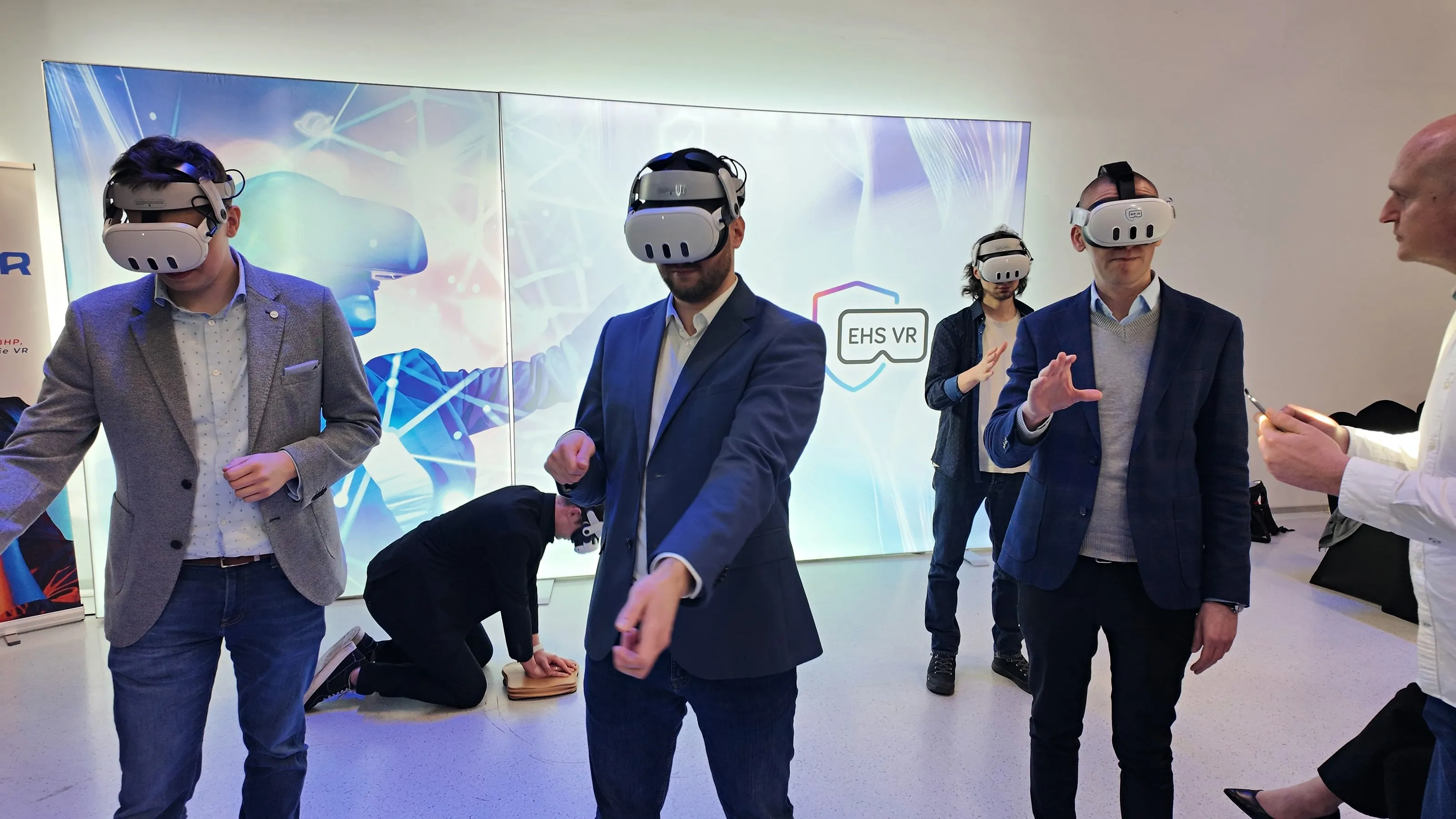
Fire, first aid, high-risk work, hazard identification and LOTO in a VR headset: what VR health and safety training covers, where it helps and where it stops.
Knowledge5 min read
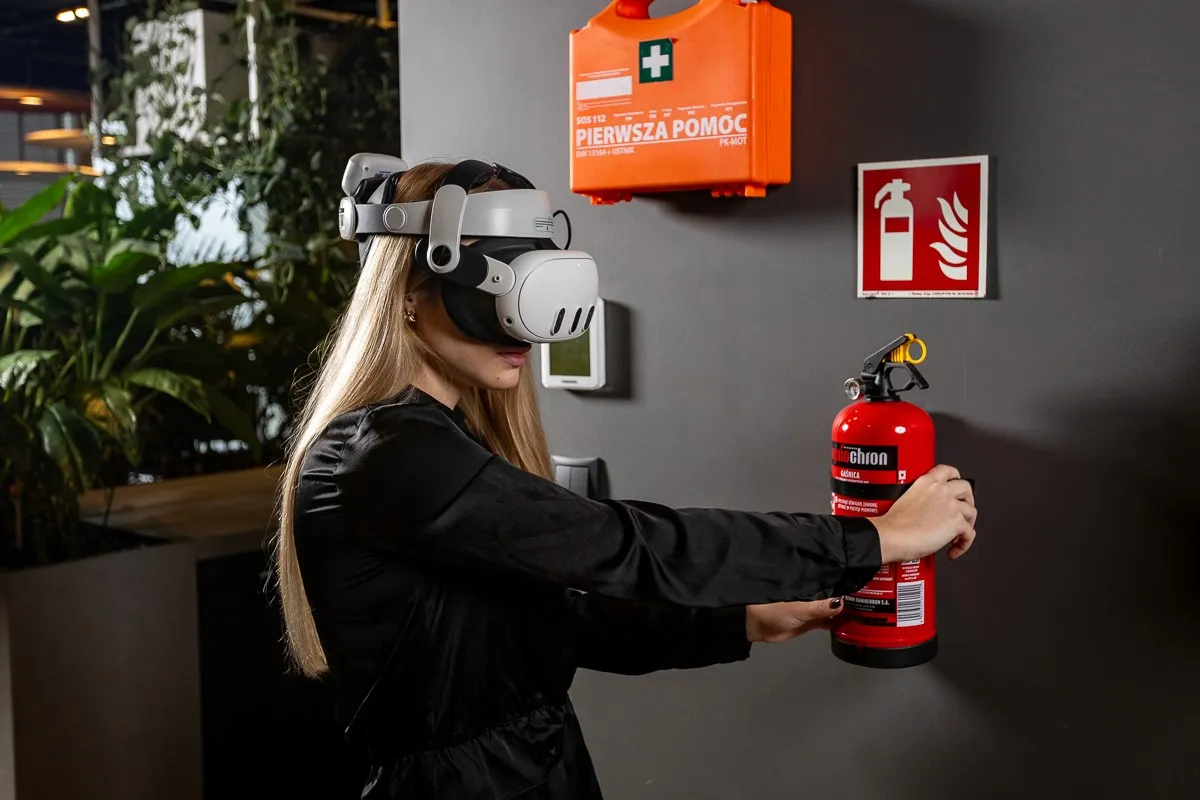
What Polish law says about fire safety training for employees, what is worth practising and how to add fire extinguisher practice without real fire.
We send you a headset with all the apps. You test for 5 business days, and we cover shipping both ways.
Get a test headsetInstall in a few minutes and test all the apps for 7 days. No card, no commitment.
Test on my headsets30 minutes online: we show you scenarios for your industry and answer your questions about rollout.
Book a callWant to see prices first? Pricing for business