VR Health and Safety Training: What It Covers and When It Works
Łukasz Kamiński5 min read
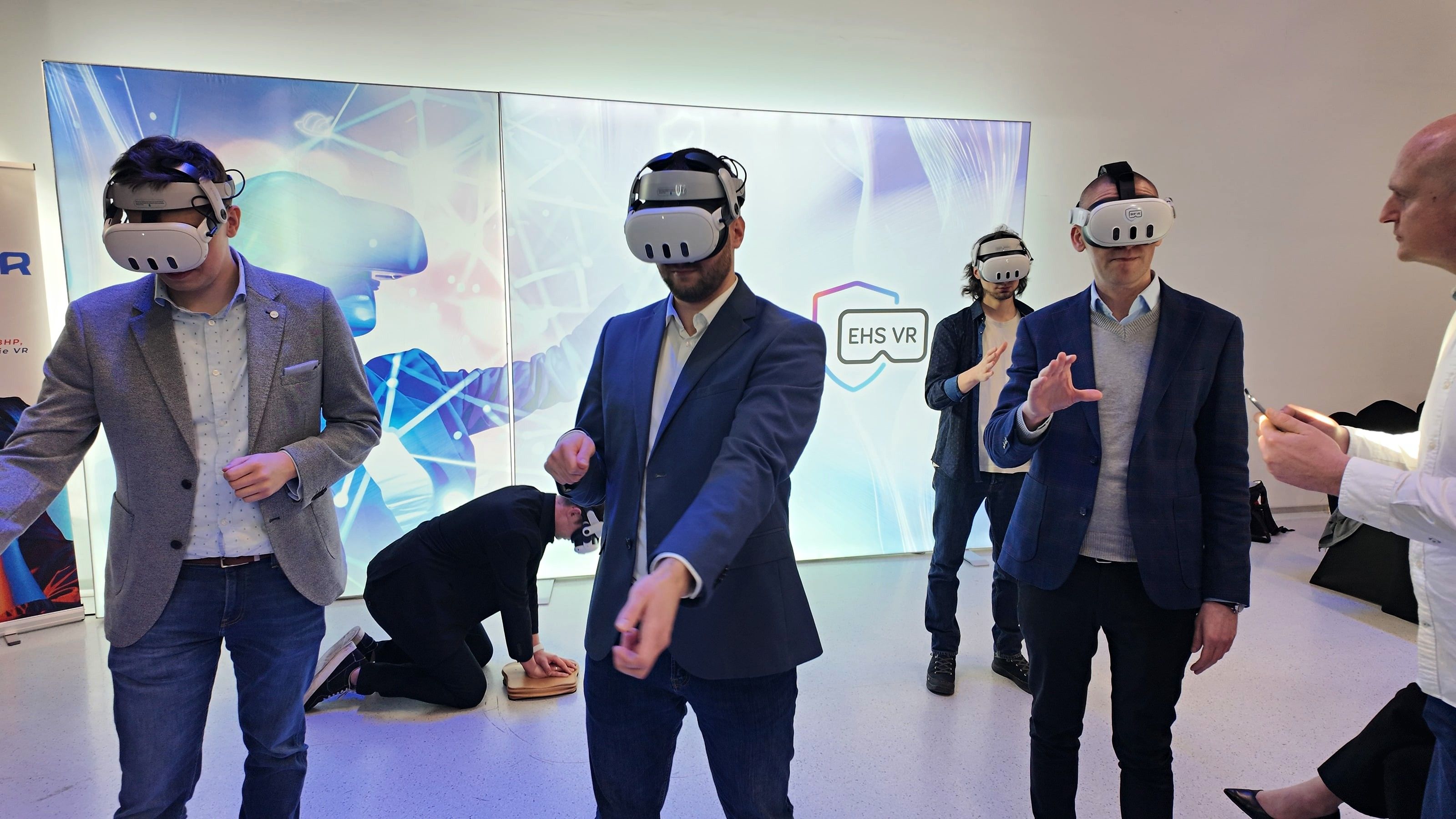
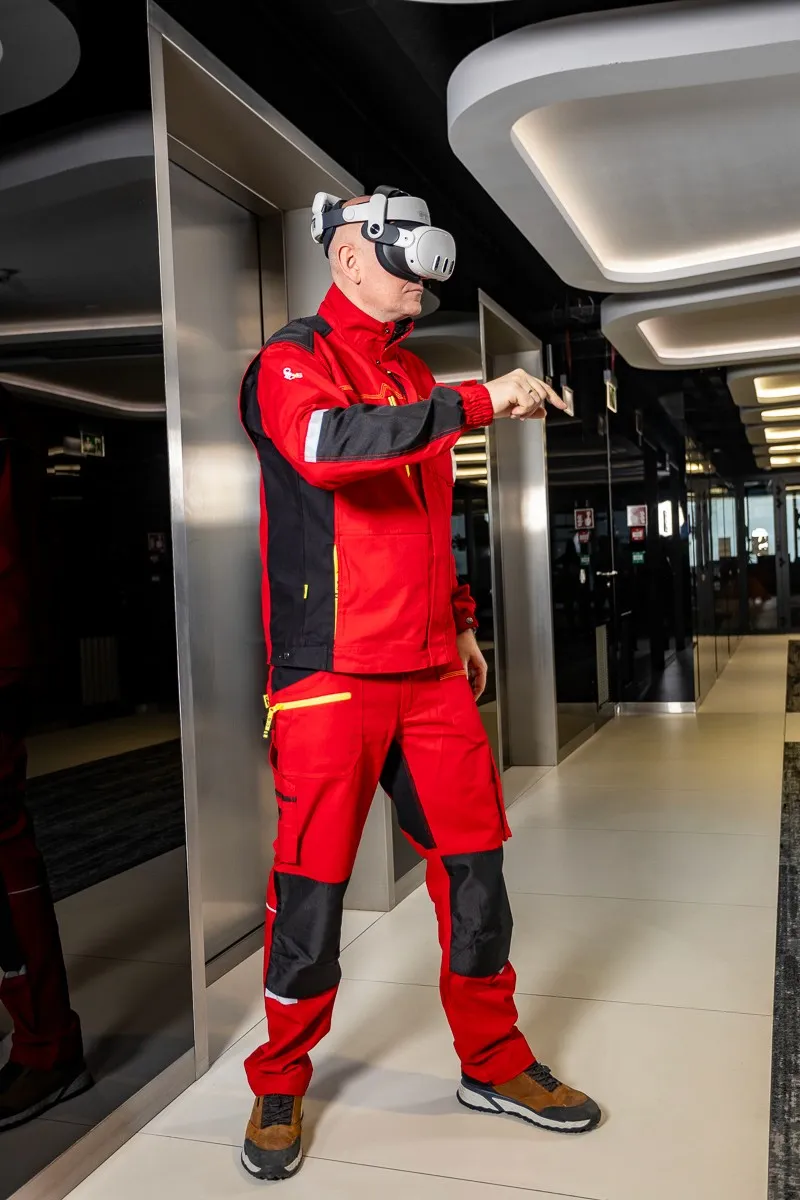
VR health and safety training means practising safety procedures in a virtual reality headset: putting out a fire, locking out a machine before maintenance, helping an unconscious colleague or spotting hazards on the shop floor. The employee does each step with their own hands, guided by a virtual instructor, in a realistic workplace where a mistake hurts no one. Below you will find what this kind of training covers, when it helps most and where it stops.
What VR health and safety training covers
At EHS VR we have built VR safety training since 2017, and the catalogue now has 50+ safety, fire and first aid scenarios. They fall into a few groups.
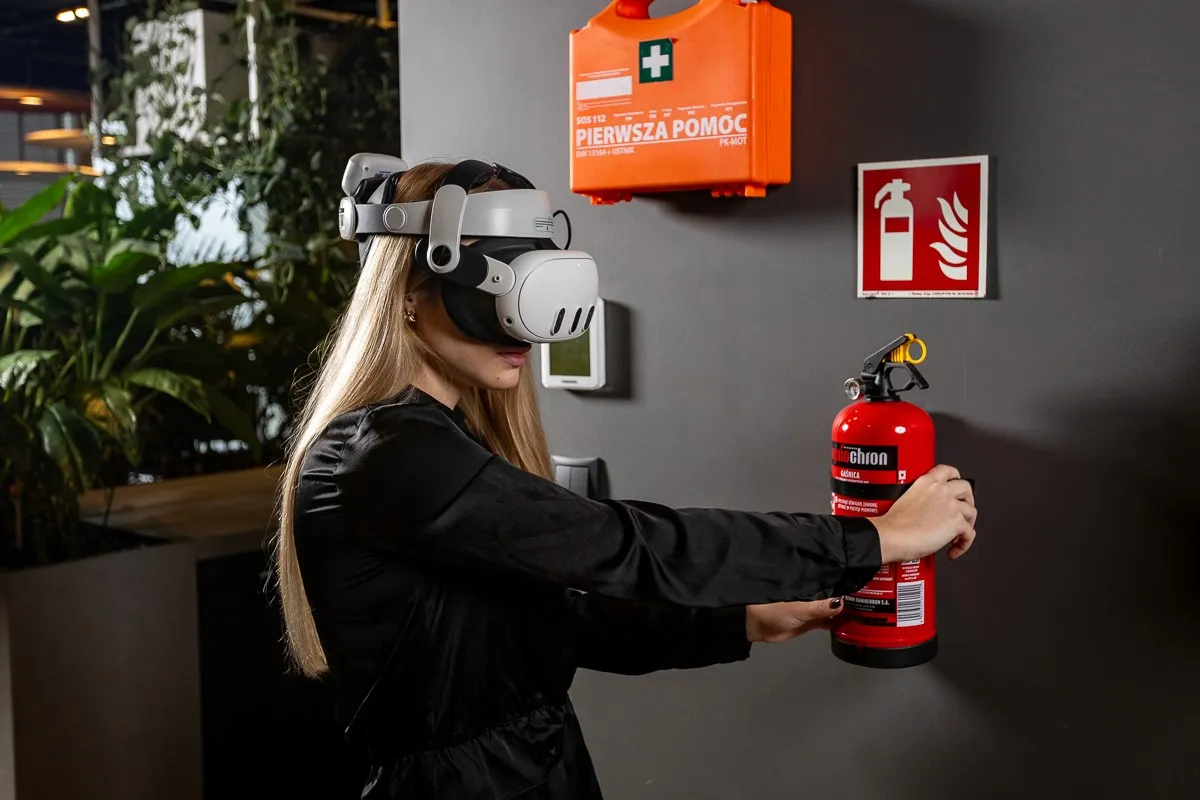
Fire safety. In Fire Extinguisher Basic VR Training a virtual firefighter explains fire classes, then the participant puts out a switchboard fire and uses the emergency power switch. The whole scenario takes about 9 minutes. More scenarios, including evacuation and the fire hose reel, are in the fire safety category.
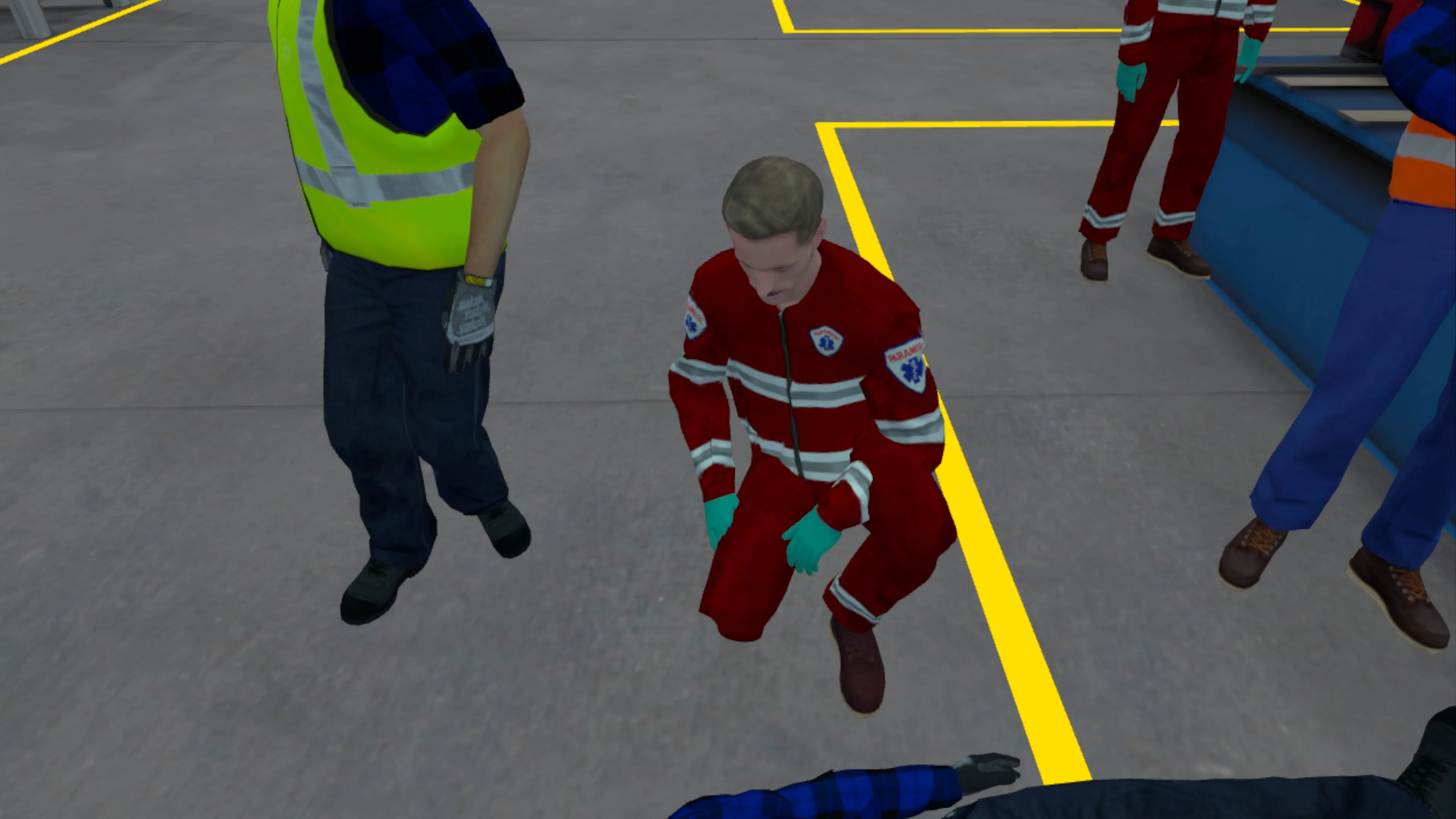
First aid. In BLS & AED in the Factory the participant finds an unconscious worker on the factory floor, checks vital signs, calls for help, talks to the rescue team by voice and performs CPR with an AED in line with the 2021 European Resuscitation Council guidelines. The 25 minute programme ends with a test in which the participant has to deal with distractions such as noise or additional hazards.
High-risk work. The high-risk work category includes Work in Confined Spaces (opening hatches, ventilation, atmosphere measurement, entry and evacuation) and Working at Height (equipment inspection, PPE, harness, fall protection and rescue in four modules). We describe the confined space app in more detail in confined space VR training.
Hazard identification.Hazard Identification VR Training has 9 short modules, about 15 minutes in total. Participants look for blocked traffic routes, noise and eye hazards, moving machine parts, obstructed fire equipment and unsafe behaviour around forklifts and overhead cranes.
Lockout/tagout.Lockout Tagout VR Training has two modules of 10 to 15 minutes each. In the training module a virtual instructor shows the energy sources in a machine and how to isolate and lock it out. In the test module the participant secures the machine on their own.
When VR safety training works best
VR is strongest where a procedure has to be done, not only understood.
Situations you cannot safely rehearse for real. Nobody sets a switchboard on fire or fills a tank with toxic fumes for a training session. In VR the participant faces the situation and has to act, with no risk to themselves or the equipment.
Practice for everyone, not just a few volunteers. With a real extinguisher or a training rig, usually a few people practise while the rest watch. In a headset each person goes through the whole scenario.
Repetition. A procedure can be repeated as often as needed until the steps come naturally. This matters for things people rarely do, such as CPR or locking out a machine they do not service every day.
A record of what happened. Every session ends with a report. In the panel that comes with every plan you see results for every person, with score and time, and can export them to CSV, Excel or a PDF report.
Training where people work. The apps work offline, and apps such as LOTO, hazard identification or BLS & AED need a play area of 2 by 2 metres, so a meeting room is enough. People use their own hands, with no controllers: the scenarios are designed for employees, not gamers.
When VR does not replace other training
VR health and safety training is a practical supplement, not a substitute for the whole system of training in a company. It does not replace:
Theory and the knowledge test. Regulations, the reasons behind a procedure and the final test of the course stay with the trainer and the training provider.
Job-specific instruction at the workstation. A VR plant is not your plant. The employee still needs to see their own machines, routes and equipment with a supervisor.
Certified courses required by law. Where the law requires a course from an authorised provider, an exam or a qualification, VR can be part of the preparation but does not grant the qualification.
Contact with real equipment. Practising with a virtual extinguisher or harness does not replace handling the real one, or an evacuation drill in your own building.
The best results come from combining both: theory and on-site instruction as usual, and VR as the place where each person performs the procedure themselves before they ever need it.
How to start with VR safety training
Choose two or three scenarios that match the real risks in your workplace, for example LOTO and hazard identification for a production plant, or fire and first aid for an office.
Test them for free. We lend you a VR headset with all our training apps for 5 business days and cover courier costs both ways. If you already have your own headsets, you can test all apps on them for 7 days.
Run a pilot with one team and look at the session results in the panel.
Pick a plan. Licensing is per headset, with any number of people on each headset. Plans and pricing are described in pricing for business.
It is hands-on training in a virtual reality headset: employees practise procedures such as putting out a fire, locking out a machine or CPR with an AED with their own hands, guided by a virtual instructor, in a realistic workplace where mistakes are safe. See our apps.
Can VR replace mandatory health and safety training?
No. VR adds the practical part: it lets people perform a procedure instead of only hearing about it. The theory, the knowledge test, job-specific instruction at the workstation and courses that the law requires to be run by an authorised provider stay as they are.
Which topics can you train in VR?
Fire safety, first aid, high-risk work such as confined spaces and working at height, hazard identification on the production floor and lockout/tagout. We have 50+ safety, fire and first aid scenarios. See for example high-risk work.
Do you need a large room or Wi-Fi for VR safety training?
No Wi-Fi is needed: the apps work offline. The space depends on the app: lockout/tagout, hazard identification or BLS & AED need a play area of 2 by 2 metres, while confined spaces needs more room. Trainees use their own hands, with no controllers.
How can I try VR health and safety training for free?
We lend you a VR headset with all our training apps for 5 business days and cover courier costs both ways. If you have your own headsets, you can test all apps on them for 7 days. Request a free trial.
Hatches, ventilation, atmosphere measurement, entry and evacuation in a VR headset: what confined space VR training practises and where real training takes over.
With your consent we use cookies and similar tools from Google, Microsoft Clarity and Meta to measure traffic, see how the site is used (heatmaps and session recordings with form fields hidden) and improve our ads, and we load the Pipedrive chat. You decide: the site works fully without them. Privacy policy
 Łukasz Kamiński